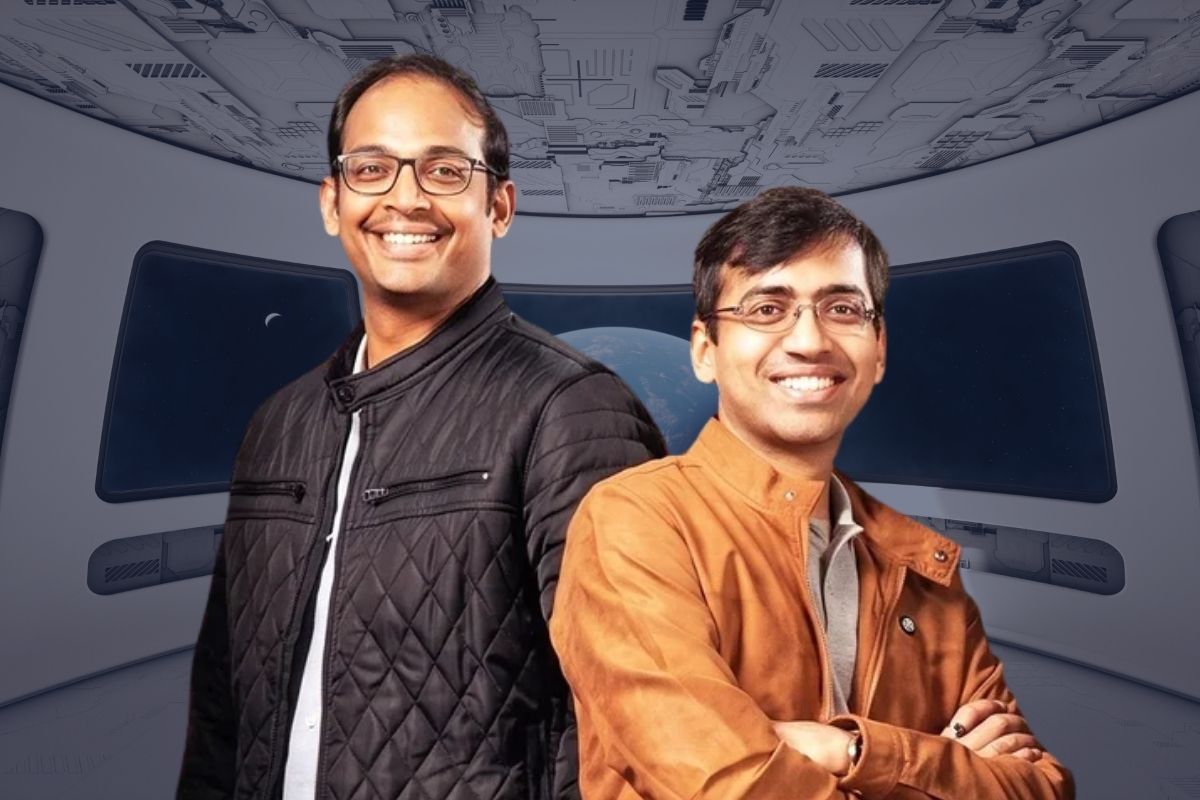
India’s private space sector has reached a key milestone. Skyroot Aerospace has become the first space technology unicorn in the country. It hit a $1 billion valuation after securing $60 million in new investment. This shows growing global trust in India’s expanding commercial space industry.
The latest funding round was backed by Singapore’s GIC, the national wealth fund. Existing investors, like Sherpalo Ventures, also took part, Reuters reported. This makes Skyroot one of the few Indian start-ups pushing global space innovation.
India’s private space industry is growing fast. This surge follows government reforms that opened the field to private companies.
Skyroot Aerospace Enters Unicorn Club
Skyroot Aerospace, one of the most renowned names in India’s new-age space sector, was founded in 2018 by ex-ISRO scientists Naga Bharath Daka and Pawan Kumar Chandana.
The enterprise gained public prominence in 2022 with the successful launch of Vikram-S, India’s first private rocket. Since then, Skyroot has been working hard on its Vikram rocket series to provide inexpensive satellite launch services for global customers.
The latest round of funding has helped the business cross the $1 billion mark to become India’s first private space-tech unicorn.
“That milestone is a sign of increasing investor confidence in India’s space capabilities for commercial purposes, industry experts said, especially with a rising global demand for low-cost satellite launches.
Also Read – Bill Gates Investment in Climate-Controlled Artificial Ecosystems
Fresh Funding to Accelerate Vikram-1 Launch
Skyroot Aerospace said the cash received will be used largely to develop and launch Vikram-1, the company’s first orbital launch vehicle.
What is Vikram-1?
Vikram-1 is a multi-stage launch vehicle for placing small satellites in low Earth orbit. The rocket is expected to be a key player in the fast-growing small satellite market, where demand is soaring from telecom, Earth observation, defence and climate-monitoring sectors.
The business has already undertaken multiple successful engine tests and system validations over the last two years.
Skyroot wants to make itself a competitive launch provider across the world with cheaper and quicker satellite deployment solutions.
India’s Space Startup Ecosystem Gains Momentum
Skyroot Aerospace’s emergence is a sign of the changing landscape in India’s space sector after government reforms opened it up to commercial engagement.
The sector, which was before wholly dominated by the Indian Space Research Organisation (ISRO), now has hundreds of entrepreneurs engaged in satellite production, launch systems, data analytics and space-based services.
Industry estimates put the number of active space firms in India at over 200 now, a huge jump from just a few five years ago.
Also Read – How To Start Learning Artificial Intelligence From Scratch
Government Reforms Helped Private Players Grow
This led to the foundation of IN-SPACe, the government-backed regulatory and facilitation agency, opening new paths for entrepreneurs to leverage ISRO infrastructure and collaborate on missions.
These regulatory changes have helped Indian companies seek foreign investment and compete in the worldwide market, experts believe.
The Indian government too has loudly spoken about its aim to boost India’s share in the global space economy during the next decade.
Global Investors Showing Strong Interest in Indian Space Technology
The new funding round in Skyroot Aerospace comes as part of a larger trend of foreign investors eyeing India’s deep-tech and aerospace sectors.
As satellite launches are becoming more and more commercially relevant to communication networks, navigation systems, defence operations and climate monitoring, companies creating launch infrastructure are garnering substantial attention across the globe.
Competition Growing in India’s Private Space Race
Skyroot Aerospace has become the first Indian space-tech unicorn, but it is not the only one in the competition. Other Indian businesses are also making great strides in launching technology and satellite systems.”
Recently, firms such as Agnikul Cosmos, Pixxel, Bellatrix Aerospace and Dhruva Space have attracted the attention of investors and foreign partners.
India might develop as a major hub for commercial satellite launches if private enterprises continue to obtain legislative backing and funding, analysts say.
Also Read – Your Phone Is Listening? How Microphone Permissions Really Work
What Skyroot’s Unicorn Status Means for India
Skyroot Aerospace’s unicorn milestone is being seen as a boost for India’s startup environment. This indicates that Indian deep-tech companies may now compete on a global level in highly advanced fields beyond financial and e-commerce.
The achievement also helps India’s desire to become a major player in the world’s commercial space industry.
As the demand for satellites is set to rise substantially over the next decade, Indian commercial space enterprises could have a much bigger role to play in future launch missions and aerospace innovation.
The success of Skyroot may also motivate additional venture capital companies and institutional investors to support Indian deep-tech businesses developing high-impact technologies.
Sources and References
- “Indian space tech company Skyroot Aerospace becomes unicorn” — The Hindu
- “Skyroot Becomes India’s 1st Space-Tech Unicorn, Raises $60 Million” — NDTV — Published May 7, 2026
- “India’s Skyroot becomes first $1 bln space tech startup with GIC, Sherpalo” — Reuters — Published May 7, 2026
- “Skyroot Aerospace becomes first Indian space-tech unicorn” — ThePrint — Published May 7, 2026





💬 Comments