
Buying a new car is not just about driving it’s about learning how to protect, maintain, and live with your car every single day.
Most internet lists talk about showy additions, but new car owners quickly learn that owning a car comes with actual problems like safety, maintenance, comfort, crises, and long-term value. The point of this book is to help people who own things, not to sell them. These gadgets for new car owners were picked because they help with problems that practically all new automobile owners have in their first year.
What Should a New Car Owner Buy First?
Start with a dash cam, then add a portable jump starter, a tire inflator with a pressure gauge, and custom-fit all-weather floor mats. Together they cost roughly $300 to $500 and deal with four problems that catch new owners off guard: accident evidence, a dead battery, low tires, and interior damage. Everything else on this list can wait.
| Gadget | When to Buy | Typical US Price* |
|---|---|---|
| Dash cam (front and rear) | Week one | $120 to $250 |
| Portable jump starter | Week one | $60 to $150 |
| Tire inflator + gauge | Week one | $30 to $60 |
| All-weather floor mats | Week one | $100 to $250 |
| Phone mount + fast charger | Week one | $30 to $60 |
| Emergency kit | First month | $25 to $60 |
| OBD2 scanner | First month | $20 to $60 |
| Cordless car vacuum | First month | $30 to $80 |
| Blind spot mirrors | Only if you lack blind spot monitoring | $10 to $15 |
| Wireless CarPlay / Android Auto adapter | Only if your car has the wired version | $40 to $100 |
Rough street prices, fall 2026. They move around, so treat them as a budget guide, not a quote.
Check What Your Car Already Has
Before you put anything in a cart, spend ten minutes with the window sticker and the owner’s manual.
Every new passenger vehicle under 10,000 pounds has had a tire pressure monitoring system since model year 2008, and it has to warn you when a tire falls 25% below its recommended pressure. Rear visibility is handled too, since backup cameras have been mandatory on new vehicles built from May 1, 2018.
That means you can skip the aftermarket TPMS and the backup camera. What’s worth looking for is blind spot monitoring (usually a small icon in each side mirror) and wireless Apple CarPlay or Android Auto. If your trim has them, two items further down the list aren’t needed.
Buy These in the First Week
1. Dash cam
Say you’re stopped at a light and someone rear-ends you. By the time you get out of the car, their story has already changed. Or a stranger sideswipes you in a parking garage and drives off. With no footage, it’s your word against theirs, and an insurance adjuster has little patience for either.
That’s why a dash cam is the one gadget here I’d call non-negotiable.

What to get:
- Front and rear. Rear-end collisions are among the most common claims, so a front-only camera misses your most likely scenario. Consumer Reports’ top 2026 pick, the Redtiger F7NP, starts around $130 and comes with a 1080p rear camera. The Viofo A119 V3 runs about $120, and the Nextbase 622GW starts near $250 (Jalopnik’s rundown of the CR list).
- Avoid the sub-$80 tier if you can. At that price you usually get 1080p, no GPS, and matching build quality. Spending $100 to $150 gets you a noticeably better sensor and a more dependable app.
- Parking mode, if you park on the street. It needs a hardwire kit (Nextbase sells one for about $30), and it’s the feature cheap models handle worst.
Two legal notes. Mount the camera behind the rearview mirror, which is an acceptable spot in virtually every state, since windshield-obstruction rules vary and some states limit where you can attach things to the glass. As for audio, California requires consent from everyone being recorded, and other states have their own rules. Most cameras let you turn audio off, which avoids the question entirely.
Heat is hard on dash cams. If your car sits in a hot lot all summer, choose a model built for high temperatures and park in the shade when you can.
2. Portable jump starter

New cars lose their batteries too. A dome light left on, two weeks in airport parking, a cold snap. Modern cars also draw more power for electronics while parked than older ones did, so a battery that sits can die faster than you’d expect.
A lithium jump starter fits in the glove box and starts the car in about two minutes without needing a second vehicle. Pick one to match your engine:
- Four-cylinder or V6 sedan, crossover, minivan: the NOCO Boost GB40 (1000A) is rated for gas engines up to 6.0L and is the one forum threads tend to recommend first.
- Big SUV, half-ton truck, diesel: move up to something like the NOCO Boost X GBX45 (1250A) or a 3000A-class unit.
- Tight budget: units under $75 from AstroAI and similar brands are fine for occasional use on regular cars.
One thing to watch: peak-amp numbers aren’t measured the same way across brands, so a “2000A” no-name unit isn’t necessarily stronger than a 1000A NOCO. Go by the engine size the manufacturer lists, not the biggest number on the box.
3. Tire inflator and a good gauge
This is where the TPMS point pays off. Your car will tell you when a tire is low. It won’t fix it.

A 12V portable inflator ($30 to $60 for a solid one) lets you top off at home instead of hunting for a gas-station air machine that’s either broken or wants four quarters. Pair it with a standalone digital gauge, because the TPMS light only triggers at 25% under spec. That’s a lot of missing air. Checking once a month with a gauge catches the slow leak long before the light does.
An inflator handles slow leaks. A real puncture or damaged sidewall still needs a shop.
Also Read: How To Start Learning Artificial Intelligence From Scratch
4. Custom-fit all-weather floor mats

The carpet mats that come from the dealer hold up fine until your first winter. Slush, spilled coffee, a kid’s juice box. Once liquid soaks into the factory carpet underneath, you’ll be fighting odors for as long as you own the car.
Laser-fit all-weather mats (WeatherTech and Husky are the usual names) have raised edges that keep the mess contained. Expect to pay $100 to $250 a set. They’re the cheapest way to protect resale value, since a clean interior is one of the first things a buyer notices.
5. Phone mount and a proper fast charger

More and more states restrict holding your phone while driving, so a mount is no longer optional. Choose one that grips firmly (vent, dash, or windshield suction, depending on your car) and sits where it won’t block your view.
Pair it with a USB-C charger rated at 30W or more from a known brand. The $6 gas-station charger is the kind that fries a phone or runs hot enough to melt the socket. Buy a good one once.
Buy these in the first month
6. Emergency kit

You can buy a pre-built kit or put one together yourself: first-aid supplies, reflective warning triangles, a flashlight, and a combination glass breaker and seatbelt cutter. Keep the glass breaker somewhere you can reach from the driver’s seat, not buried in the trunk. Add a tire-pressure gauge and work gloves.
You’ll probably never use most of it, and that’s how it should be.
7. OBD2 scanner
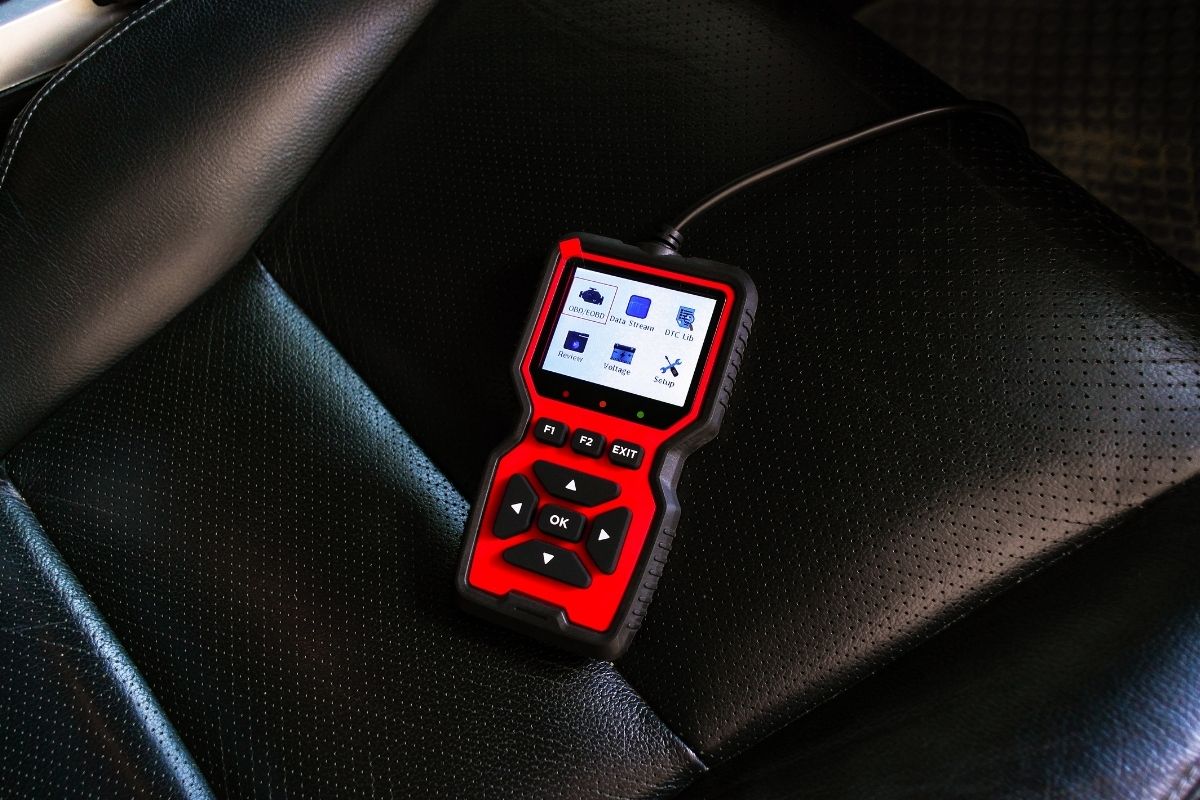
Every car sold in the US since 1996 has an OBD2 port under the dashboard. A Bluetooth scanner ($20 to $60) plugs into it and reads fault codes on your phone. A new car won’t throw many, but when a check-engine light does come on, you’ll know whether it’s a loose gas cap or something worth a warranty visit before you’re standing at the service desk.
Also Read: Your Phone Is Listening? How Microphone Permissions Really Work
8. Cordless car vacuum

Crumbs, sand, pet hair. A small cordless vacuum ($30 to $80) keeps them from working into the seat seams, and you’ll likely use it more than anything else on this list. It’s cheaper than a $150 detail every few months.
9. Blind spot mirrors (only if your car lacks monitoring)

If your trim doesn’t have blind spot monitoring, stick-on convex mirrors cost about $10 and do the job. Angle them so you can just see the edge of your own car in the main mirror, with the rest of the view showing the lane beside you.
Only if your car needs it
10. Wireless CarPlay or Android Auto adapter

If your car supports CarPlay or Android Auto only over a cable, a wireless adapter ($40 to $100) saves you from plugging in every time you get in. Check first, though. Many newer cars already connect wirelessly, and a cheap adapter can add lag or drop the connection mid-route. Read recent reviews for your specific car.
What I’d skip for now
- Aftermarket TPMS. Your car already has one, as covered above.
- Backup camera. Same story.
- Car air purifier. A plug-in unit moves very little air in a cabin, and the filter is the part that matters. Spend that money on a fresh cabin air filter at your first service instead.
Last Thoughts: Smart Gadgets Make Owners Smarter
For people who just bought a car, the proper devices do more than make it more comfortable; they also boost confidence, make it safer, and preserve the investment.
Instead of buying extras to make your car appear better, focus on tools that:
- Fix genuine difficulties with driving
- Help your car stay healthy for a long time
- Lower stress and unexpected costs
Frequently Asked Questions
Will adding gadgets void my new car warranty?
No. The Magnuson-Moss Warranty Act makes it illegal for a manufacturer or dealer to void your warranty just because you used an aftermarket part, and the FTC says the manufacturer or dealer has to show the part caused the problem before denying coverage. The real risk is sloppy wiring: if a badly hardwired gadget damages the electrical system, that’s on you. Plug-in gadgets (12V socket, OBD port) avoid the problem.
Are dash cams legal in the US?
Yes, in all 50 states, though placement and audio rules differ by state. Video recording is generally unrestricted. Mounting behind the rearview mirror keeps you compliant almost everywhere, and you can turn off audio in the camera’s settings if you drive through an all-party-consent state like California.
Does my new car already have tire pressure monitoring?
Yes. Federal rules required TPMS on all new vehicles under 10,000 pounds starting with model year 2008, so any new car sold today has it. It warns you when a tire is 25% below the recommended pressure, which is why a handheld gauge is still worth owning.
How much should I budget for new car gadgets?
Plan on $300 to $500 for the essentials: a dash cam, jump starter, inflator, and floor mats. Add $100 to $200 over the first month for a charger, mount, emergency kit, and vacuum.
What gadgets are worth buying first for a first-time car owner?
The same four. A dash cam covers a bad day on the road, a jump starter and tire inflator cover the two most common breakdowns, and floor mats protect the interior from day one.





💬 Comments