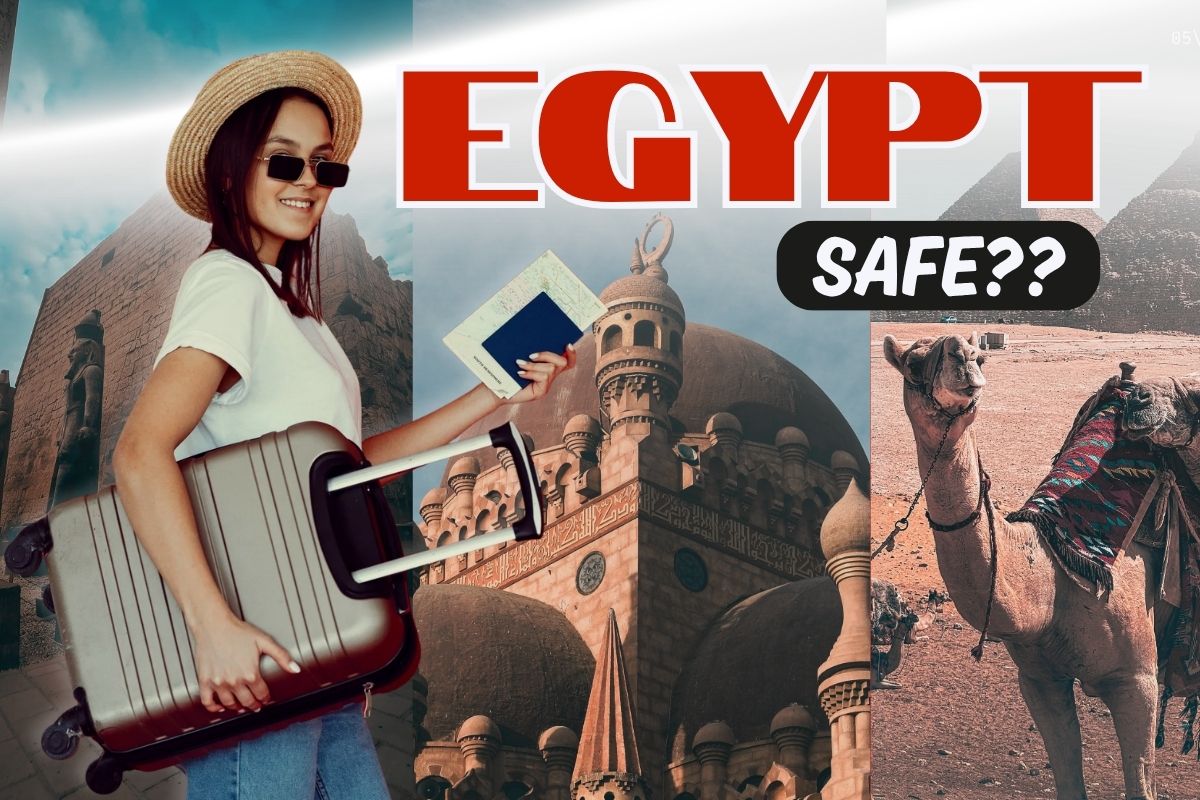
Planning to travel to Egypt has been on countless bucket lists for generations, and honestly, it is not hard to see why. The pyramids standing tall against a desert sky, feluccas drifting lazily on the Nile, the overwhelming scale of Karnak Temple, Egypt hits differently from any other destination on earth. But the question that keeps popping up in every travel forum and family group chat remains the same: is it actually safe to go there right now?
The short answer is yes, but with a few things you genuinely need to understand before you land.
What the Official Advisories Say
As of April 2026, the U.S. State Department has Egypt listed at Level 2 “Exercise Increased Caution.” That sounds alarming until you realize Level 2 covers dozens of popular travel destinations worldwide. It is not a ban. It is not even close to one. The U.S. Embassy in Cairo is fully operational, and routine consular services are running normally.
Two areas carry serious “Do Not Travel” warnings that you must take literally: the Northern and Middle Sinai Peninsula, and the Western Desert region near the Libyan border. These are not vague cautions; they are hard restrictions backed by real security concerns. Stay away from these zones entirely, and the picture changes dramatically.
The Reality on the Ground for Tourists
Here is what most travel advisories do not tell you clearly enough: Cairo, Luxor, Aswan, Hurghada, and Sharm el-Sheikh are genuinely busy, functioning tourist destinations with heavy security presence. Tourism police are stationed at every major site. Hotels run bag checks at entrances. The infrastructure around the main tourist corridor has been built, maintained, and reinforced specifically to keep visitors safe and coming back.
Egypt pulled in a record 15.7 million tourists in 2024, and 2025 numbers continued climbing. People are not traveling to Egypt despite the advisories; they are traveling because, once you separate the restricted zones from the main routes, the experience is overwhelmingly positive. Violent crime against foreign visitors is rare. Most people who have traveled to Egypt recently describe feeling watched over rather than threatened.
Also Read – How to Travel from London to Paris
Where You Can Go Confidently
The classic Egypt itinerary, Cairo, Giza, a Nile cruise from Luxor to Aswan, and a few days on the Red Sea coast, runs through areas that are among the most tourist-friendly in the entire Middle East. Luxor and Aswan, in particular, are incredibly well-organized for visitors. A Nile cruise between these two cities is one of the lowest-stress ways to travel to Egypt because everything from transport to guiding is handled, and you are rarely left navigating anything alone.
Red Sea resorts like Hurghada and Marsa Alam cater almost entirely to international visitors and maintain strong hotel and beach security. Families, couples, solo travelers, and senior tourists all move through these areas without major incident every single day.
The Risks Worth Taking Seriously
Petty scams and persistent touts are genuinely the biggest day-to-day frustrations for anyone who decides to travel to Egypt. Overcharging, fake guides, aggressive selling near monuments, and taxi drivers claiming broken meters are all common. None of these are dangerous, but they are exhausting if you are unprepared for them. Hiring a reputable local guide, especially for your first trip, cuts through almost all of it.
Road safety is a legitimate concern that often goes underreported. Egyptian traffic, particularly in Cairo, operates on its own logic. Accidents are common, lane discipline is essentially nonexistent, and driving yourself around the capital is a genuinely bad idea for most foreign visitors. Use hotel-arranged drivers or tour transport whenever possible.
Women traveling to Egypt, especially solo, should be prepared for unwanted attention and verbal harassment in public spaces. Dressing modestly, using pre-arranged transport rather than hailing random taxis, and avoiding isolated areas after dark all make a meaningful difference.
The Regional Situation in 2026
The broader Middle East has seen heightened tension since early 2026, and Egypt sits close enough to those flashpoints that situational awareness matters more this year than it did in 2024 or 2025. No confirmed threat inside Egypt’s main tourist zones has materialized, but the U.S. Embassy has issued multiple alerts urging travelers to monitor developments and have contingency plans for potential flight disruptions.
Registering with your embassy before you travel to Egypt takes five minutes and means you receive direct alerts if something changes while you are there. Do it. It costs nothing and gives you a direct line to help if you ever need it.
The Best Time and Practical Tips
October through April is the sweet spot to travel to Egypt. The heat is manageable, the light is stunning for photography, and the main sites are genuinely enjoyable to explore on foot. Summer in Luxor and Aswan is brutal, with temperatures pushing past 45°C, making sightseeing physically punishing.
Carry Egyptian pounds in cash. Markets, local restaurants, smaller transport options, and tips all run on cash. Cards work in hotels and larger tourist shops, but you will constantly need small bills for day-to-day life.
Bottom Line
To travel to Egypt in 2026 is to make a well-considered, reasonable choice, not a reckless one. Stick to the established tourist routes, respect local laws, keep up with embassy alerts, and use reputable operators for transport and guiding. Do all of that, and what you get in return is one of the most extraordinary travel experiences available anywhere on earth.





💬 Comments