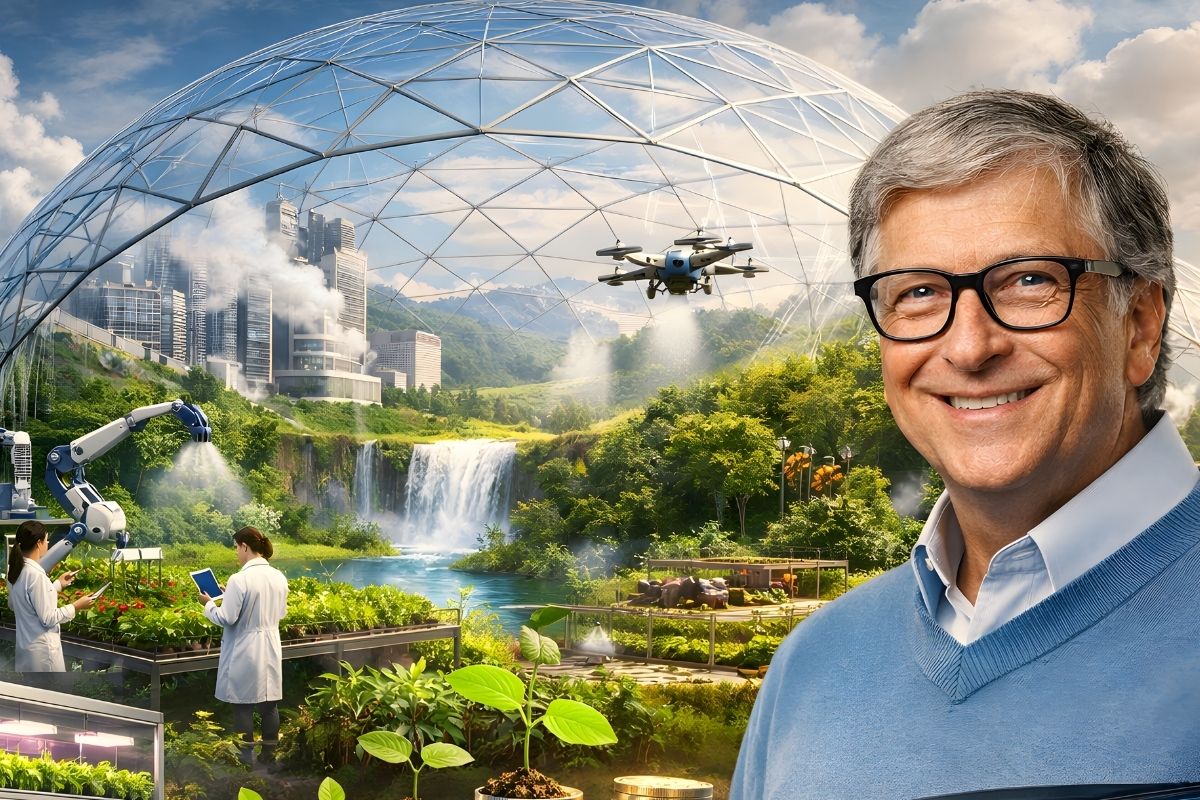
Bill Gates has been spending his time and money to help solve one of the largest challenges facing humanity: climate change. Bill Gates’ projects and initiatives, including Breakthrough Energy, are looking for new ways to solve problems that go beyond the usual ones that use renewable energy. One of the most interesting and forward-thinking ideas that is gaining popularity in the climate change field is artificial ecosystems. They are controlled settings that can copy and keep the processes of genuine ecosystems going.
What do you mean by “Man-made Ecosystems”?
People control the environment in artificial ecosystems so that it looks and performs like a natural ecosystem. Artificial ecosystems keep things like temperature, humidity, light, and nutrition levels stable so that plants, animals, and/or bacteria may live. Artificial ecosystems are different from natural ones since they are made to be stable, efficient, and last a long time.
Vertical farms, biospheres, and climate-controlled agriculture systems are all examples of artificial ecosystems. These systems may live in locations that are quite harsh, including deserts and cities. This means that they could help with climate change and environmental damage.
Also Read – Which Organ Is First Affected by White Phosphorus?
Why Bill Gates Is Putting Money into Artificial Ecosystems
Bill Gates has supported new ideas that might help fight climate change. Bill Gates put money into artificial ecosystems for a few reasons:
1. Stopping Climate Change
Climate change has made it tougher to raise food all around the world and has had a big influence on farming. Artificial ecosystems don’t depend on the weather outdoors, which makes them a stable choice.
2. Cutting down on the amount of Carbon Dioxide That Gets Out
Many people say that farming is one of the main things that puts carbon into the air. One way to cut down on carbon emissions is to grow food inside instead of outside. Creating artificial ecosystems can help with this.
3. Making The Most of the Resources You Have
Artificial ecosystems don’t need as many resources to grow food as older ways do. Gates wants resources to be used more efficiently. Artificial ecosystems do this by using systems that deliver nutrients and recycled water.
The Main Things That Let Artificial Ecosystems Work
Gates and his collaborators are pushing new technologies that are making the rise of Artificial Ecosystems possible:
More Modern Systems For Manipulating The Weather
Sensors and smart gadgets with AI keep an eye on the environment all the time. These systems control the temperature, humidity, and light levels to make the best conditions for plants to thrive, which keeps productivity high.
Aeroponics and Hydroponics
A lot of man-made ecosystems don’t need dirt. They use systems that transport nutrients through air or water instead. These ideas conserve space and make things work better.
Using Energy That Comes From Nature
Many fake ecosystems employ renewable energy sources like the sun and wind to make sure they last. This is in line with global climate targets and helps them have less of an impact on the environment.
Farming Based on Data
Big data analytics and AI help find problems early and help crops grow better. This lowers losses and raises productivity.
Also Read – Drinking Warm Water Vs Cold
How Real-life Artificial Ecosystems Work
People all throughout the world are already using Artificial Ecosystems differently because of Bill Gates’ investments:
Farming in Cities
Artificial ecosystems make it possible to grow food in small spaces in cities with a lot of people. Vertical farms can grow fresh vegetables all year, so we don’t have to rely on imports as much.
Farming in The Desert
Climate-controlled systems can help crops grow in places with harsh climates, such as deserts, when the temperatures and water levels are very low.
Going Into Space
Scientists are also thinking about using artificial ecosystems on space missions, where life needs certain circumstances to stay alive. This shows how flexible they are and how much they can alter over time.
Problems and Criticism
Even while artificial ecosystems could be incredibly useful, they do have several problems:
Costs are High at First
It costs a lot of money to build and keep these systems up. Costs will undoubtedly go down over time, but they are still too pricey for most people to use.
Using power
A lot of systems employ renewable energy, yet some still need a lot of electricity. Some people are now wondering how long the systems will last as a whole.
A Few Different Kinds of Crops
Right present, the greatest places to grow some plants, including herbs and leafy greens, are in artificial habitats. They are still striving to add staple foods to the list of things they can do.
Bill Gates knows about these problems, but he thinks that more money and new ideas can help fix them.
The Future of Ecosystems Made by People
As technology grows better, the future of artificial ecosystems seems positive. If famous people like Bill Gates keep backing these technologies, they could become a large part of living in a way that doesn’t affect the environment.
Artificial ecosystems can be used on a large scale to grow food and protect the environment as the world’s population grows and environmental issues become more relevant. They show that farming is moving away from traditional methods and toward a system that is more controlled, efficient, and can handle changes in the weather.
Also Read – Why Broccolini Deserves a Spot in Your Cart
In Short
Bill Gates’ investment in Artificial Ecosystems shows that he wants to find new ways to deal with climate change. He is helping to make the future more sustainable by backing technology that mimics and enhances how things work in nature.
Artificial ecosystems are more than simply a new technology; they are something we need in a world where the weather is always changing. There are still problems to solve, but the advantages are significantly more than the risks. This makes them one of the most exciting new things in environmental research right now.
If we put more money and research into artificial ecosystems, they could change the way we grow food, use resources, and keep the world safe for future generations.





💬 Comments